Bluestone: A Place for Parents to Breathe Again
Featuring insights from Dr Rachel Taylor, Neuroscientist and Specialist in Nervous System Wellbeing
Across the UK, parents are carrying more than ever before. The pace of life has accelerated, screens have crept into every corner of the day, and the pressure to “get everything right” has become a quiet, constant weight. Recent national wellbeing data reflects this shift: more than 70 per cent of parents believe their children spend far less time outdoors than they did, and over half feel that family life has become dominated by digital noise and endless demands. Natural England’s People and Nature Survey echoes these concerns, showing that 60 per cent of children now spend less time outdoors than before the pandemic, with 81 per cent spending less time outside with friends.
Dr Rachel Taylor, a neuroscientist specialising in nervous system health and wellbeing, sees the impact of this every day. She describes families who love each other deeply but rarely get the conditions they need to connect. Children who are bright and curious, yet overwhelmed by stimulation. Parents who want to be present, but feel stretched thin by the pace of modern life. In her view, the issue is not a lack of love or intention, but a lack of space — the kind of space that allows the nervous system to settle, breathe, and reconnect.
This is where places like Bluestone matter.
Bluestone is not simply a holiday destination. It is a gentle interruption — a place where the nervous system can soften, where families can exhale, and where parents can remember what it feels like to be present.



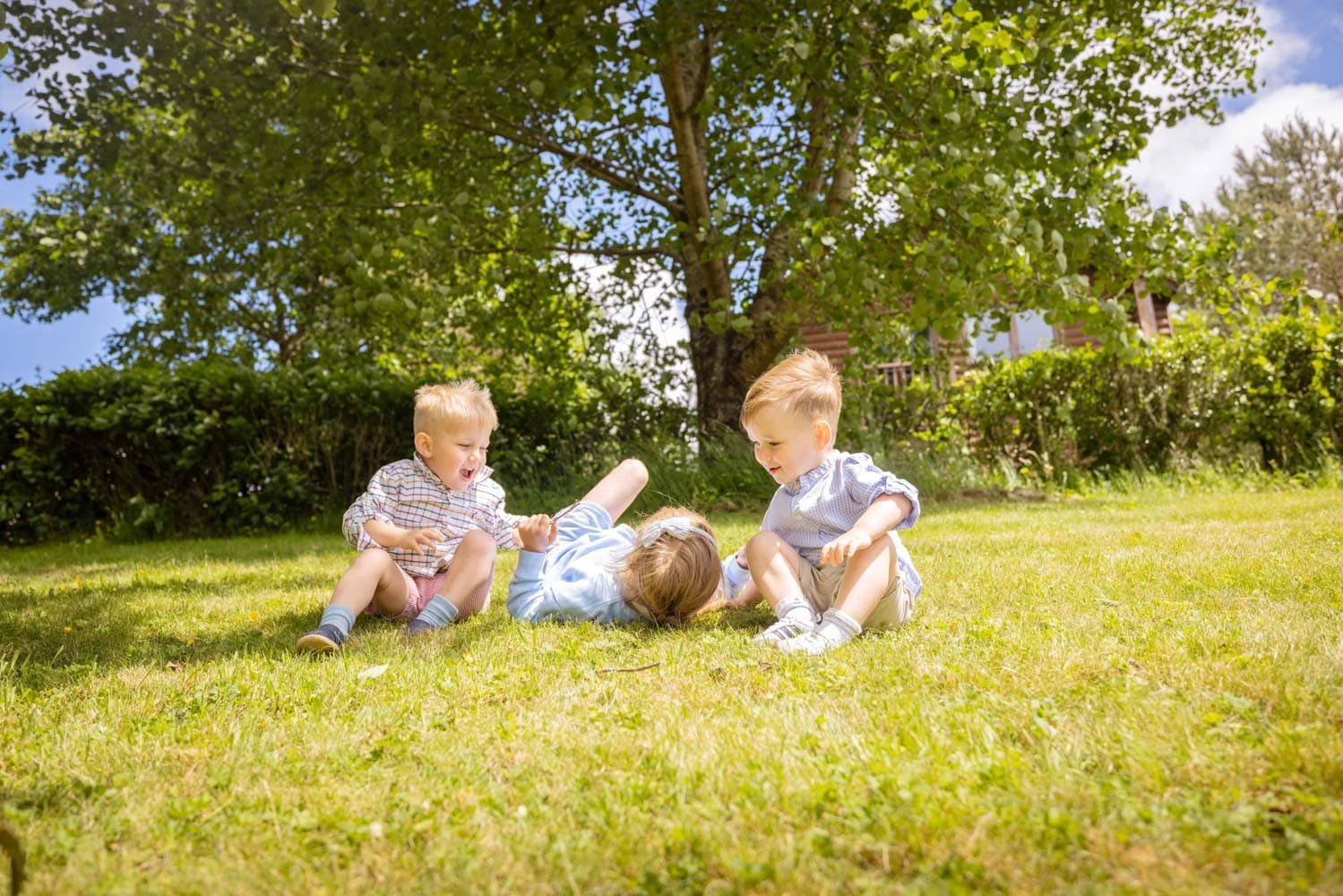

Many parents today did not grow up climbing trees or roaming freely. A large generational study found that only 27 per cent of today’s children regularly play outside their homes, compared with 71 per cent of baby boomer grandparents. Even adults now in their late fifties and early sixties recall that 80 per cent of their childhood involved outdoor play — a freedom that has not carried forward into modern parenting. For many families, the idea of “getting back to nature” is not a return to something they once had, but a longing for something they never fully experienced.
Dr Taylor explains that this longing is not sentimental; it is biological.
The adult nervous system responds instinctively to open space, fresh air, and the absence of pressure. Even adults who have never considered themselves outdoorsy find themselves breathing more deeply, thinking more clearly, and settling into a calmer rhythm when they step into a natural landscape. Nature, she says, is not a luxury — it is a regulator.
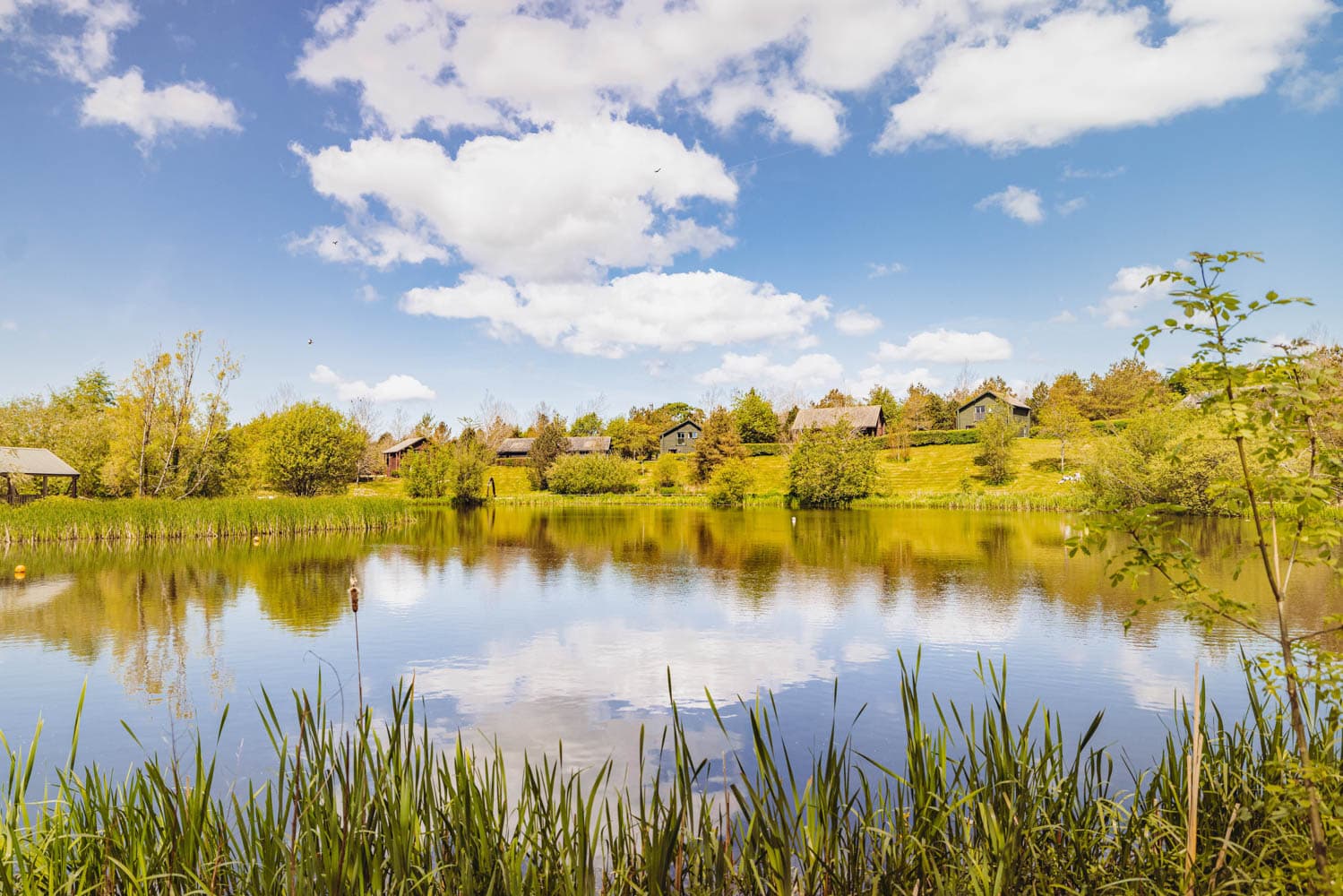
Bluestone provides that regulation effortlessly. Its landscape does the work for parents, offering a sense of ease that is increasingly rare in everyday life. Within a day of arriving, many parents report feeling different — not because they are doing anything extraordinary, but because they finally have room to breathe.
This shift matters profoundly for children. Developmental neuroscience shows that children regulate through the adults around them. When a parent is calm, grounded, and emotionally available, the child’s nervous system follows. Yet modern life rarely gives parents the conditions to feel that way. There is always something to manage, something to respond to, something pulling attention away.
Bluestone interrupts that cycle with a kind of quiet generosity.

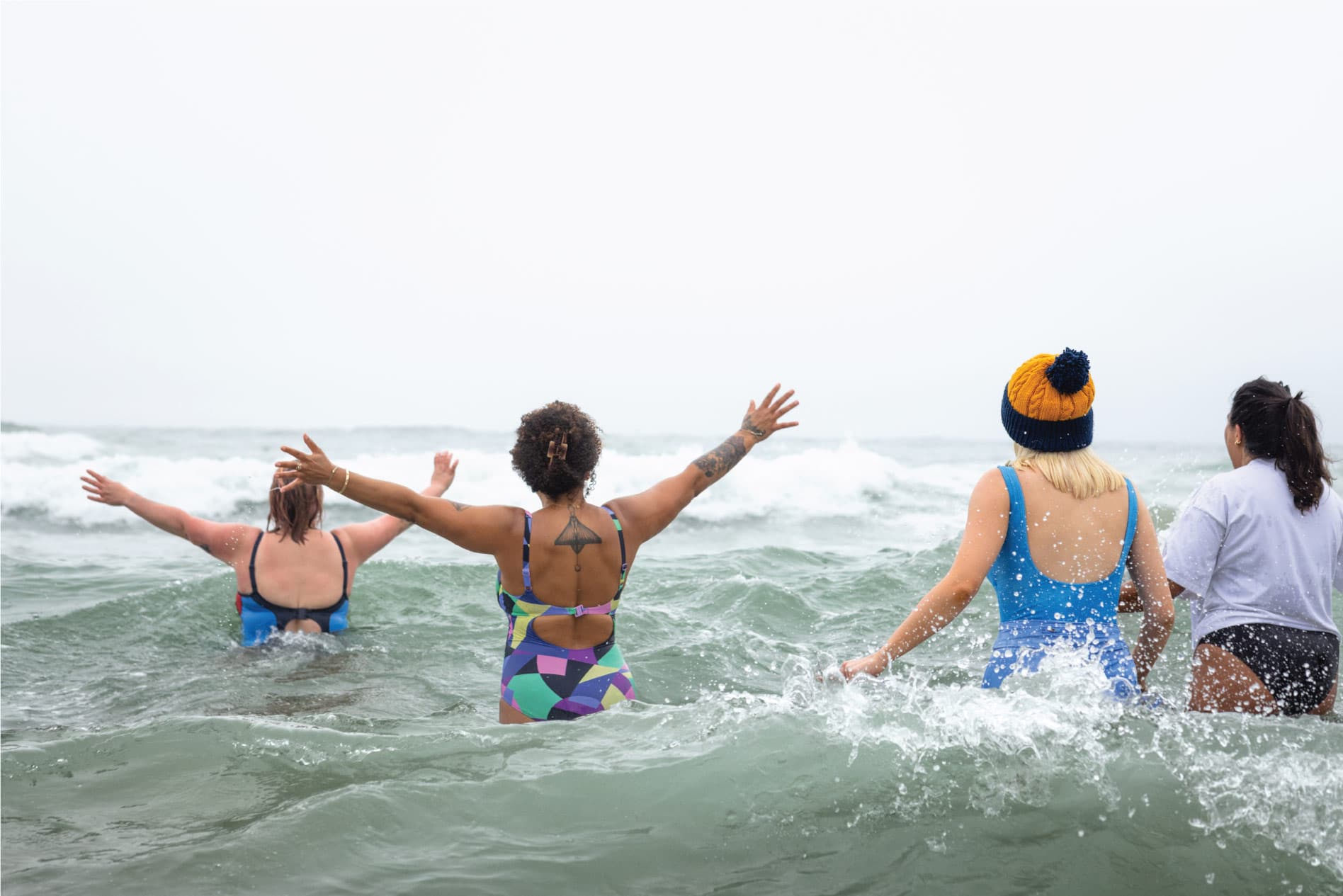
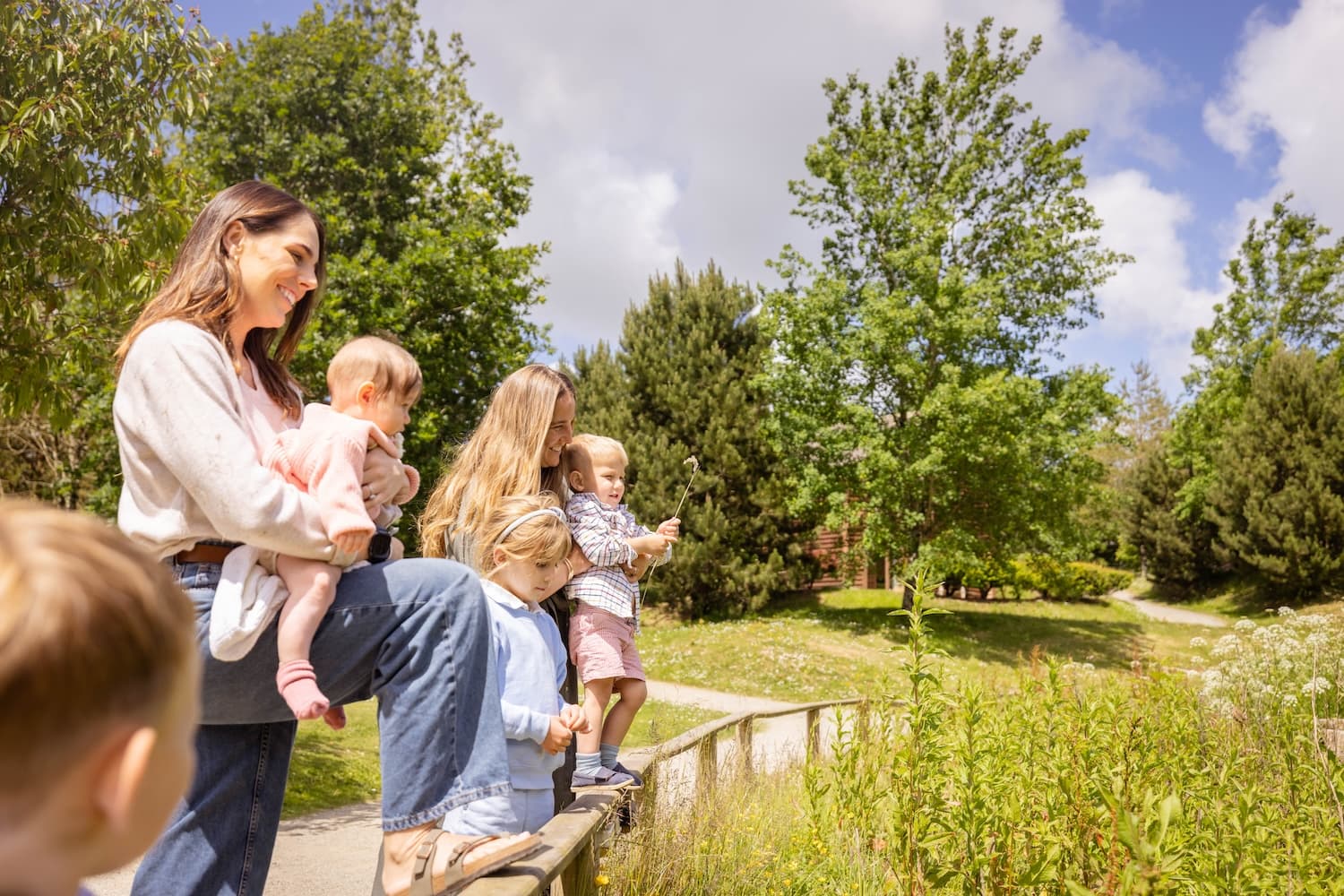

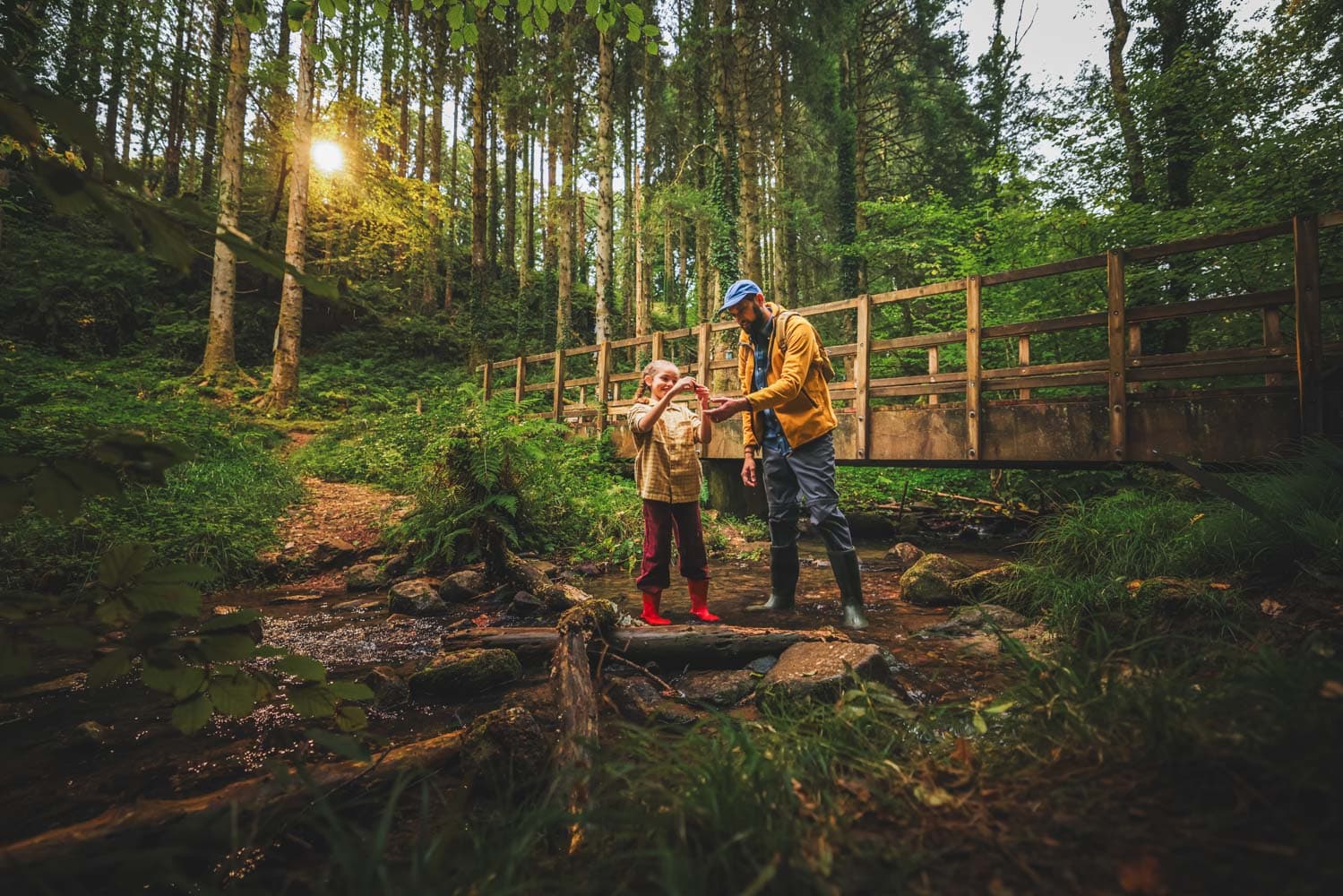
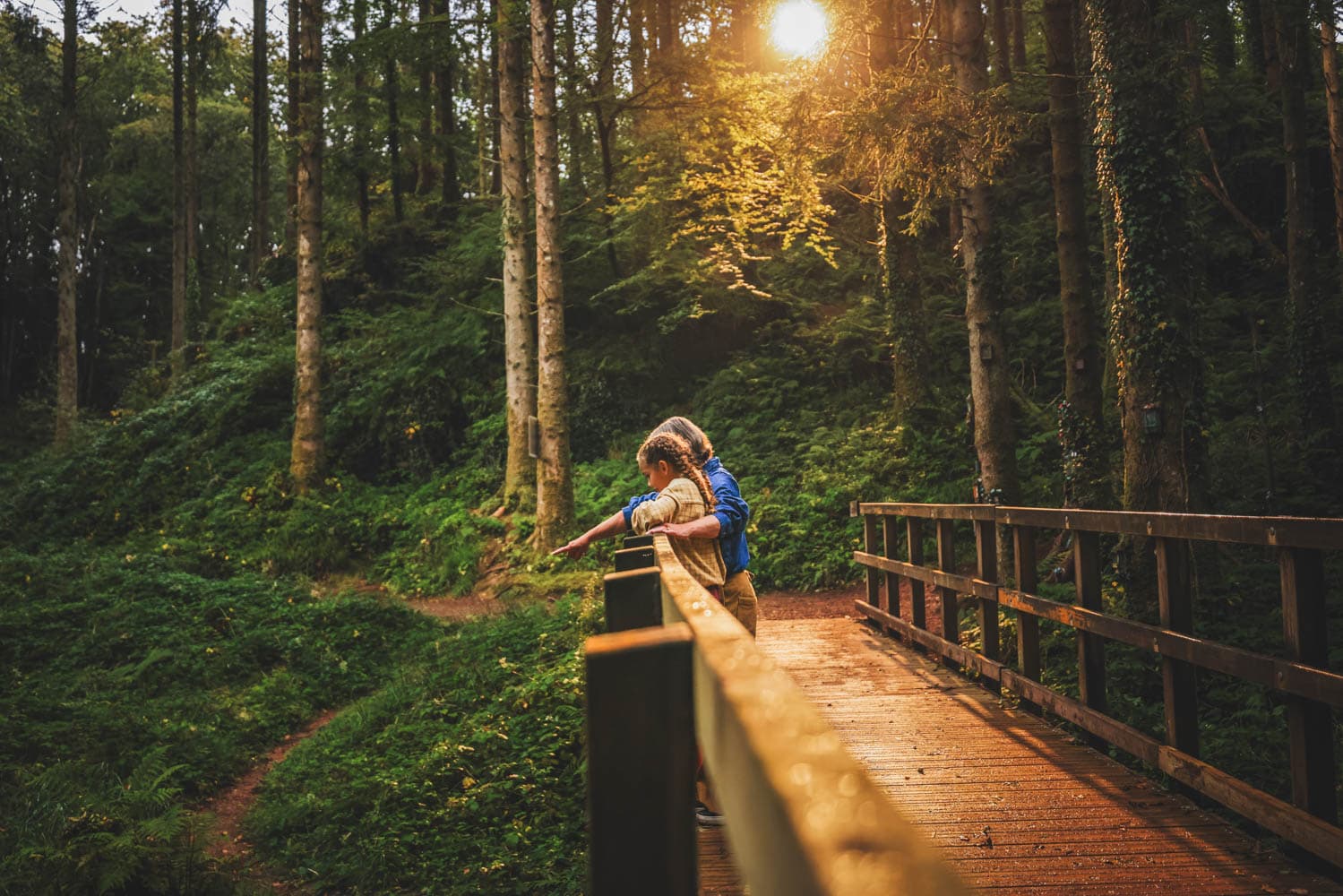
It offers space without expectation, nature without pressure, and moments of connection that arise naturally rather than being routine. Families often find that the simplest experiences become the most meaningful: a walk where a child’s hand finds a parent’s, a moment of stillness where rushing stops, or a shared laugh that arrives without effort.
The research supports this. Eighty three per cent of children say that being in nature makes them very happy, and studies consistently show that unstructured outdoor play supports emotional resilience, strengthens family bonds, and reduces stress for both adults and children. But what matters most is not the activity itself — it is the connection that grows when parents feel present enough to join in.
Dr Taylor often meets parents who feel they are falling short simply because the world gives them no space to succeed. Bluestone is designed around this truth. It does not overwhelm families with noise or spectacle. Instead, it creates the conditions for small, meaningful, moments of memories — the kind that become part of a family’s story.
A walk where a child’s hand finds a parent’s. A moment of quiet where rushing stops. A shared laugh that arrives without effort. A sense of “this is what we have been missing.”
It is not about being the perfect parent; it is about being a present one.
Bluestone gives parents the space to remember what matters, and the calm to share it with their children.
And for many families, that is where everything begins again.
Show Reference list
Discover more about Bluestone
Our resort
A special place where you can explore, relax, feast and embrace the freedom of the great outdoors.Find out moreOur accommodation
Spacious lodges and colourful terrace cottages create a relaxed atmosphere, nestled within rolling hills, meadows, and tranquil woodlands.Find out moreSustainability
Bluestone was founded with a vision of mutual benefit for employees, the environment and the community.Find out more